
Guest blog by Scott Lucas
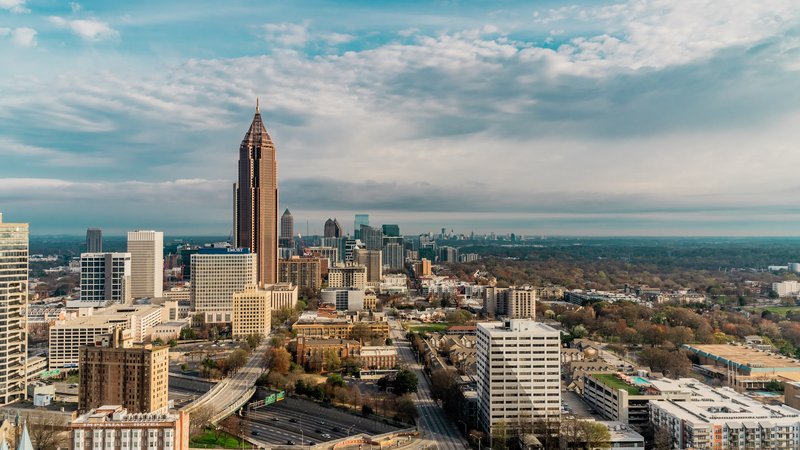
A lot has happened in Atlanta in the last forty years: The Olympics. The Beltline. Bad and Boujee. What hasn’t changed is a zoning code that was originally written in the 1980s.
Zoning 2.0
So when the city embarked on an ambitious project to rewrite its zoning laws — which it called Zoning 2.0 — YIMBYs, urbanists, developers, and advocates from across the city’s political spectrum were optimistic. But now, with Zoning 2.0 set to be adopted by the city council this winter, expectations are lower. Much lower, in fact.
“This is a wonderful ordinance,” said Eric Kronberg, the founder of Kronberg Urbanists + Architects. “As long as you've kept your head in the sand.”
What’s particularly frustrating for Atlanta’s YIMBYs is that they are sure that Mayor Andre Dickens knows how to do better. That’s because in addition to serving as Atlanta’s mayor, where he has championed subsidies for affordable housing, Dickens is one of the co-chairs of the National Housing Crisis Task Force, a group of mayors and governors who are working to reform housing policy in the face of federal inaction. Dickens has also made subsidized affordable housing a priority as well.
It’s a contradiction that advocates are hoping to take advantage of, lobbying Dickens and the city council to take a harder— and maybe better — look at housing and zoning.
“We want to highlight some ideas that our own mayor has come out in support of through the National Housing Crisis Task Force,” said Ernest Brown, a local chapter volunteer leader for Abundant Housing Atlanta. In particular, he pointed to reforms like upzoning single-family home parcels, by-right addition of ADUs, legalization of townhouses, and removal of parking minimums. These are all ideas that other cities have adopted — as well as ones contained in the Task Force’s report.
That might seem straightforward, but it’s been far from easy.
Understanding Atlanta Development
Joel Dixon, a local developer, explained why. It helps to know the city’s history as well as Dixon does. After growing up in public housing, he attended Stanford and worked in the tech industry in California. Returning home in the early 2000s, he started buying and fixing up homes with a friend in the East Lake neighborhood, which was changing thanks in part to the East Lake Golf Club that has been the site of PGA's annual Tour Championship since 2004. “I was gentrifying places,” said Dixon. “I literally did it. We weren’t greedy developers, we were just Black guys who wanted to make some money in a neighborhood that was transitioning. It wasn’t that it was right or wrong, but I felt responsible.”
So in 2016, Dixon began to work as a developer, trying to find transformational models for housing that could mitigate displacement and include communities like the one he grew up in the city’s prosperity. That’s when Dixon began to connect the dots between zoning and racial redlining. At the time, he was living in Adair Park, about a mile from where he grew up, on a block that had once been served by streetcars and populated by whites but was now primarily Black. One by one, he saw duplexes on his street get bought and turned into single-family homes — because according to the 1980s zoning laws, they had to be. Dixon ran the numbers with another developer and found that 24% of the housing capacity just on his street had been eliminated thanks to that zoning. Surely the city could do better than that?
Enter the Atlanta City Design. “It was a comprehensive plan: This is our mission, this is our vision, these are all values, and this is the book,” said Dixon. “Land use, development, funding, all of this stuff.” Atlanta’s staff worked carefully on it, on the understanding that it would guide the city’s development in the future. The only problem was that once it came out, nobody seemed to pay any attention to it.
There may be reasons for that: Not only were many wealthy white residents in Buckhead, the northernmost district in the city, so opposed that they threatened to secede, but many wealthy Black residents in the city’s southwest were also opposed. “That created an unholy alliance,” said Dixon.
“Rich Black and rich white Atlanta really didn't like those zoning changes,” said Kronberg, “so the mayor has been very careful his first four plus years in office, to not touch zoning.” Adding to the difficulty is a planning system that often empowers NIMBYs and a city council president whose first bill in office was a (defeated) proposal to ban tiny homes. What it all means is that Atlanta has fallen behind other comparable southern cities like Charlotte,.
Next Steps for YIMBYs
This growing gap was felt most keenly in December, when after years of work, the city officially released Zoning 2.0. “It’s a missed opportunity," said Brown, “because their mandate was ‘no policy change.’” Although the document updates the city’s zoning code, it does so in a way that leaves the urban pattern of the 1980s virtually untouched — car-centered, preservationist, and exclusionary.
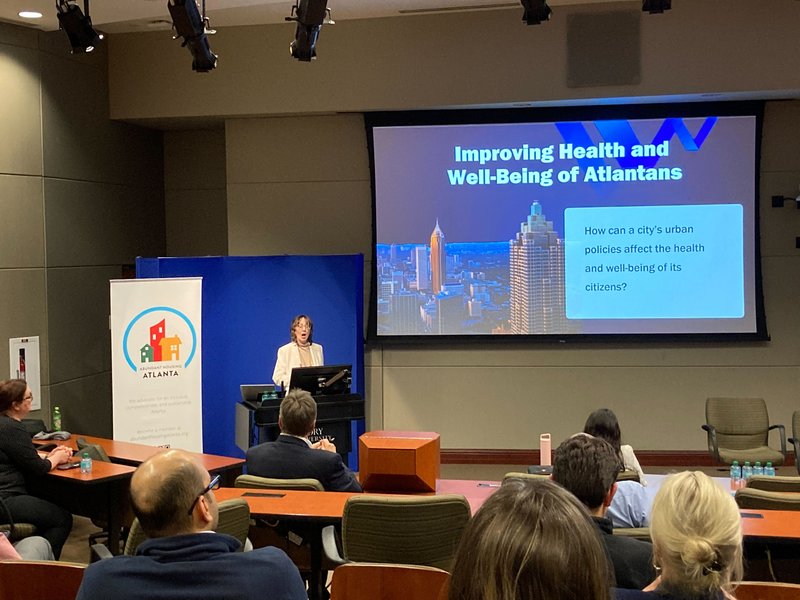
YIMBYs aren’t giving up in the face of this disappointment, however. Not only are they lobbying the mayor and the city council to include better policies in Zoning 2.0, they are also beginning to look ahead, thinking about what reforms can be passed following its implementation. It’s a tough calculation, though. Is it better to push for what they can get now? Or to wait for the next bite at the apple? Whatever the answer, they know that zoning reform takes a long time, and that every missed chance sets up another opportunity down the line to do better — to be the forward-looking city that Atlanta claims to be.
“Atlanta has had phenomenal planning over the years, and the amount [of ideas] sitting on shelves would horrify people. Almost none of them happened,” said Dixon.”If we were to do it, we could be the city that people already think we are. We always punched above our weight. Now if we could just be our weight, instead of acting like we are smaller.”
It’s a sentiment with which Brown sadly agreed.
“Is the city doing some cool, innovative stuff others could learn from? Hell yes. Is Atlanta at all meeting the moment? No.”